Does your vehicle drift left or right even when you’re holding the steering wheel straight? If so, you’re probably asking yourself, «Why is my car pulling to one side when driving straight?» While it may seem like a minor annoyance, this issue often signals a problem with your tires, suspension, steering, or braking system.
Ignoring a vehicle that pulls to one side can lead to uneven tire wear, reduced fuel efficiency, poor handling, and even dangerous driving conditions. The sooner the problem is diagnosed, the easier—and often less expensive—it is to fix.
Here’s everything you need to know about why your car pulls to one side and the five most common causes.
Why Does My Car Pull to One Side?
When your vehicle is properly maintained, it should travel in a straight line with minimal steering correction. If it consistently drifts to one side, something is preventing the wheels from working together correctly.
The issue may be as simple as low tire pressure or as serious as worn suspension components or improper wheel alignment. Identifying the cause early helps improve safety and prevents unnecessary wear on other vehicle parts.
5 Reasons Your Car Pulls to One Side
1. Incorrect Wheel Alignment
The most common reason a vehicle pulls to one side is poor wheel alignment.
Wheel alignment refers to the angles of your wheels relative to the road and each other. Everyday driving, hitting potholes, striking curbs, or driving over rough roads can gradually knock the alignment out of specification.
Signs of poor alignment include:
- Vehicle drifts left or right
- Steering wheel is off-center
- Uneven tire wear
- Reduced handling stability
A professional wheel alignment restores proper handling, improves fuel efficiency, and helps extend tire life.
2. Uneven Tire Pressure
Even a small difference in tire pressure can cause your vehicle to pull toward one side.
If one front tire has significantly lower pressure than the other, it creates additional rolling resistance that affects steering and stability.
Proper tire inflation helps improve:
- Steering response
- Fuel economy
- Tire lifespan
- Braking performance
Checking your tire pressure at least once a month is one of the easiest ways to prevent this problem.
3. Worn Suspension or Steering Components
Your suspension and steering systems work together to keep your tires firmly planted on the road while maintaining proper alignment.
As components wear over time, the vehicle may begin drifting unexpectedly.
Common parts that can wear include:
- Ball joints
- Tie rod ends
- Control arm bushings
- Wheel bearings
- Struts and shocks
If left unrepaired, worn suspension components can make steering unstable and accelerate tire wear.
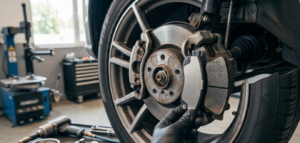
4. Brake Problems
If your vehicle only pulls to one side while braking, the problem may be within the braking system rather than the steering system.
Possible causes include:
- Sticking brake caliper
- Uneven brake pad wear
- Damaged brake hose
- Warped brake rotor
A sticking brake caliper may keep one brake partially engaged, causing the vehicle to pull during deceleration and increasing brake wear.
5. Uneven or Damaged Tires
Tires naturally wear over time, but uneven tread wear or internal tire damage can also cause your vehicle to drift.
Watch for these warning signs:
- Feathered tread wear
- Flat spots
- Tire bulges
- Uneven tread patterns
- Different tire sizes on the same axle
Rotating your tires regularly and replacing damaged tires helps maintain stable handling and extends tire life.
Other Possible Causes
Although less common, your vehicle may also pull to one side because of:
- Bent suspension components after an accident
- Improper wheel installation
- Faulty power steering components
- Rear wheel misalignment
- Uneven vehicle loading
A complete inspection is the best way to identify the exact cause.
Is It Safe to Drive If My Car Pulls to One Side?
While your vehicle may still be drivable, it’s not a problem you should ignore.
Driving with this issue can lead to:
- Premature tire wear
- Reduced steering control
- Poor emergency handling
- Increased fuel consumption
- Additional suspension damage
If the pulling suddenly becomes more severe or is accompanied by unusual noises or vibrations, schedule an inspection as soon as possible.
How Mechanics Diagnose the Problem
A professional inspection typically includes checking:
- Tire pressure
- Tire condition and tread wear
- Wheel alignment
- Suspension components
- Steering linkage
- Brake system
- Wheel bearings
Accurate diagnosis helps ensure the correct repair is performed instead of replacing unnecessary parts.
How to Prevent Your Car From Pulling
Routine maintenance is the best way to keep your vehicle driving straight and safely.
Follow these simple tips:
- Check tire pressure at least once a month.
- Rotate your tires every 5,000 to 7,500 miles.
- Have your wheel alignment checked annually or after hitting a pothole.
- Replace worn suspension components promptly.
- Inspect your brakes during routine maintenance.
- Avoid striking curbs whenever possible.
These preventive measures improve handling, increase tire lifespan, and reduce long-term repair costs.
Frequently Asked Questions
Why does my car pull to one side after hitting a pothole?
A pothole can easily knock your wheel alignment out of specification or damage suspension components, causing the vehicle to drift left or right.
Can low tire pressure make my car pull?
Yes. A tire with lower air pressure creates more rolling resistance, causing the vehicle to pull toward that side.
Why does my car only pull when braking?
This usually indicates a brake-related problem, such as a sticking brake caliper, uneven brake pad wear, or a warped brake rotor.
Is a wheel alignment expensive?
Wheel alignments are generally affordable and can save money by preventing premature tire wear, improving handling, and increasing fuel efficiency.
How often should wheel alignment be checked?
Most automotive experts recommend checking wheel alignment at least once a year, after replacing suspension components, or anytime you notice uneven tire wear or steering changes.
Knowing why your car is pulling to one side when driving straight can help you fix minor issues before they become expensive repairs. Whether the cause is poor wheel alignment, uneven tire pressure, worn suspension parts, brake problems, or damaged tires, addressing the problem early improves safety, extends tire life, and keeps your vehicle handling exactly as it should.
When it comes to keeping your car reliable and safe in Miami, FlashLube Miami Gardens is your go-to choice for fast, trustworthy service. Explore all our services designed to save you time and hassle, and take advantage of our exclusive coupons to keep your car running smoothly without breaking the budget. Don’t wait—protect your vehicle and drive with confidence every day!